



Firefall After the Storm
Yosemite Valley
February 27–28, 2026
Two weeks earlier, we came to Yosemite during Firefall season and were met with a very dry-looking Horsetail Falls and a lackluster sunset. Since then, a major winter storm had moved through the Sierra, forcing the park to close and evacuate visitors for several days.
When the park reopened and the forecast showed clear skies, we quickly decided to give it a second try. The recent snow and the possibility of one more chance were too tempting to pass up.
The valley floor was warm, reaching 63 degrees. The warm weather was melting the snow quickly, but it still covered most of the ground. Higher up, the fresh snowpack promised to provide more water flow in Horsetail.
Snow and Water
We arrived early to avoid the notroious entrance gate lines that happen during Firefall season. The extra time gave us the entire day to explore.
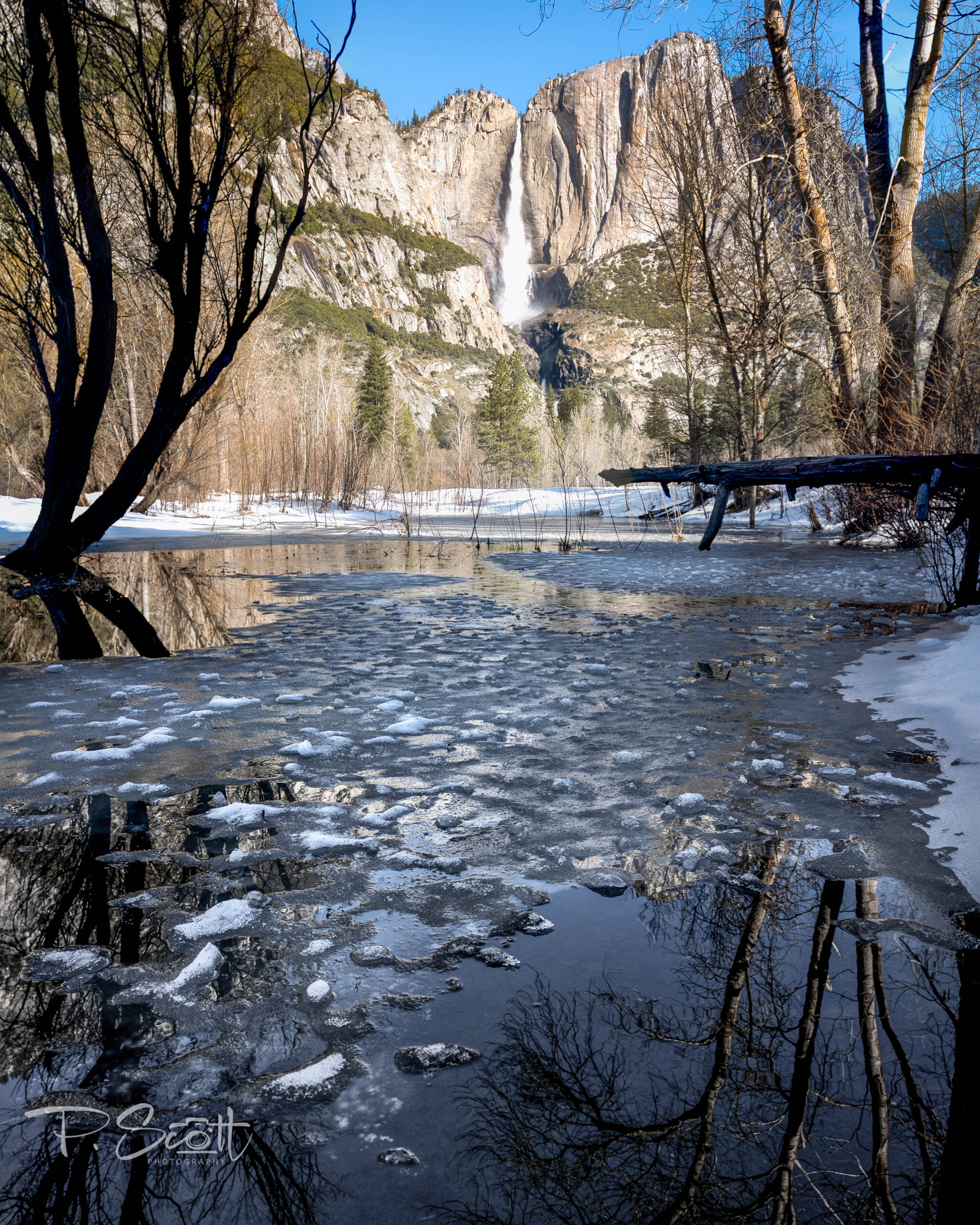
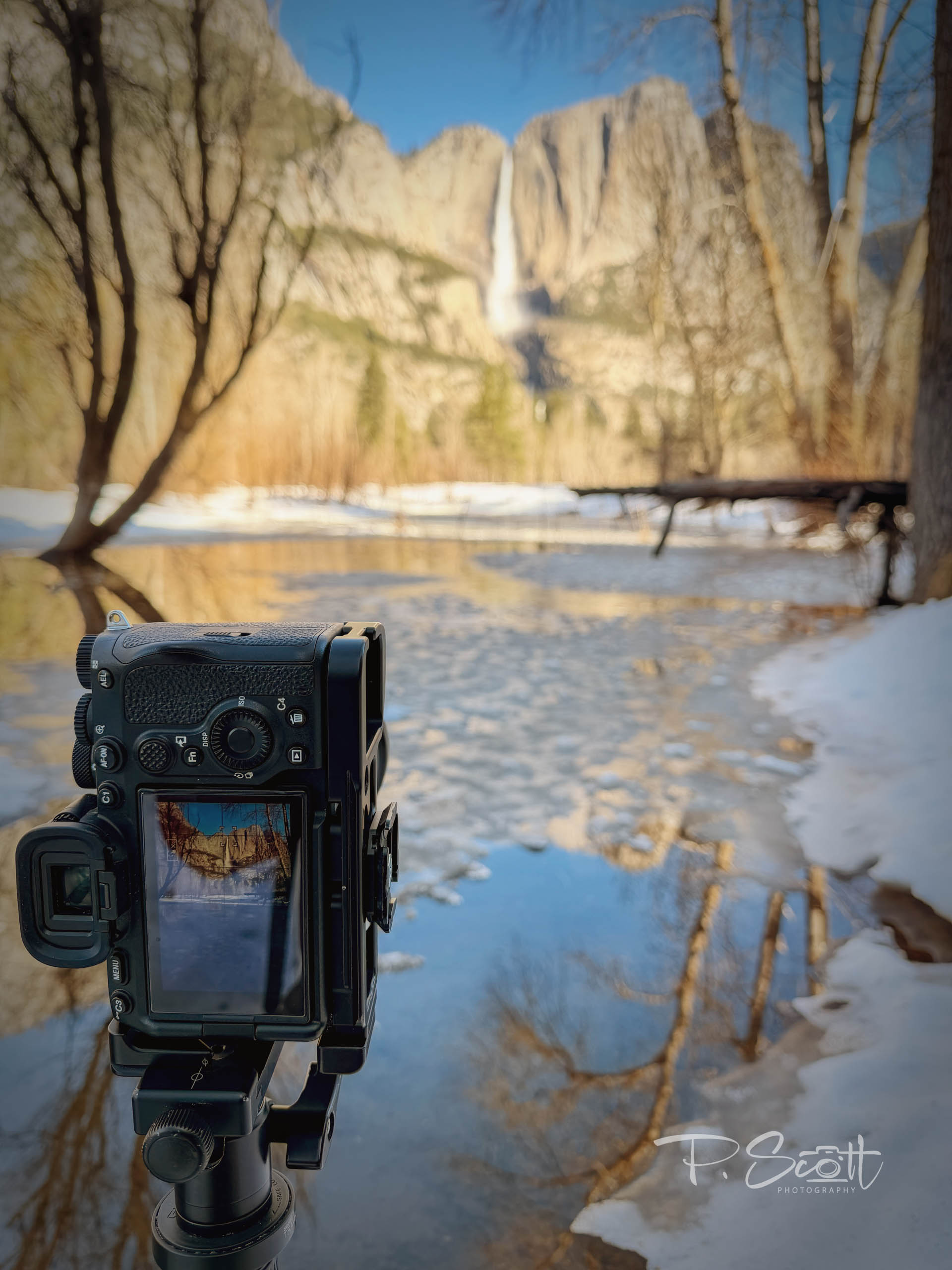
Near the Merced River, Yosemite Falls was visibly stronger than it had been two weeks earlier. In one shaded pocket along the river’s edge, the water was still covered in ice. We stepped carefully through the snow, watching for slick patches along the frozen edge. The river wasn't fully iced over, just this shaded section, but it showed how recent the storm had been.
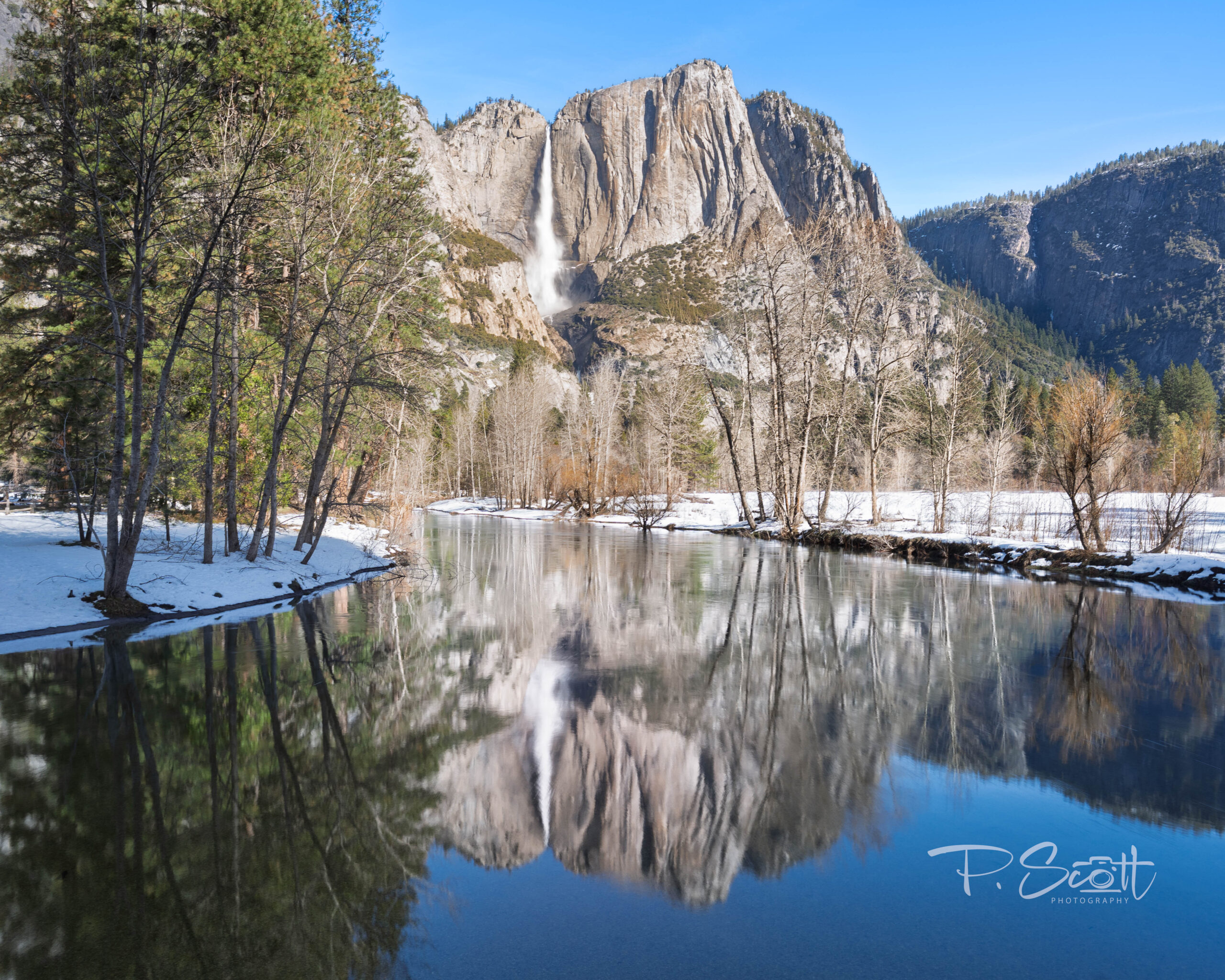
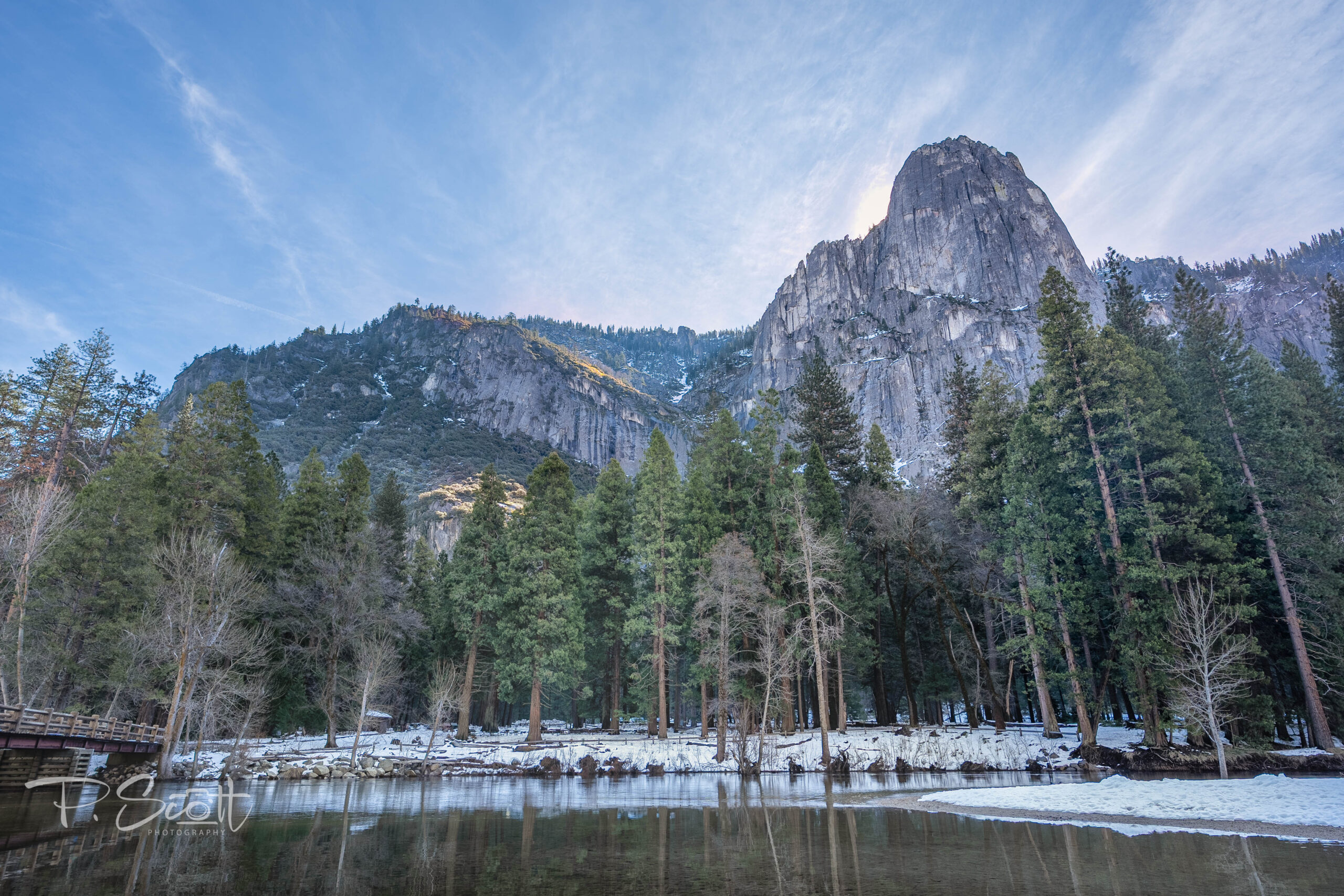
From Swinging Bridge, the river was calm enough to reflect Yosemite Falls. Snow along the banks. Clear blue sky. No dramatic light. Just a lot of water.
Around 10 a.m., sunlight edged over Sentinel Rock and began catching the trees and small ledges along the valley wall. The granite lit up in sections while the valley floor stayed cool and shaded. Snow still covered the forest beneath the pines.
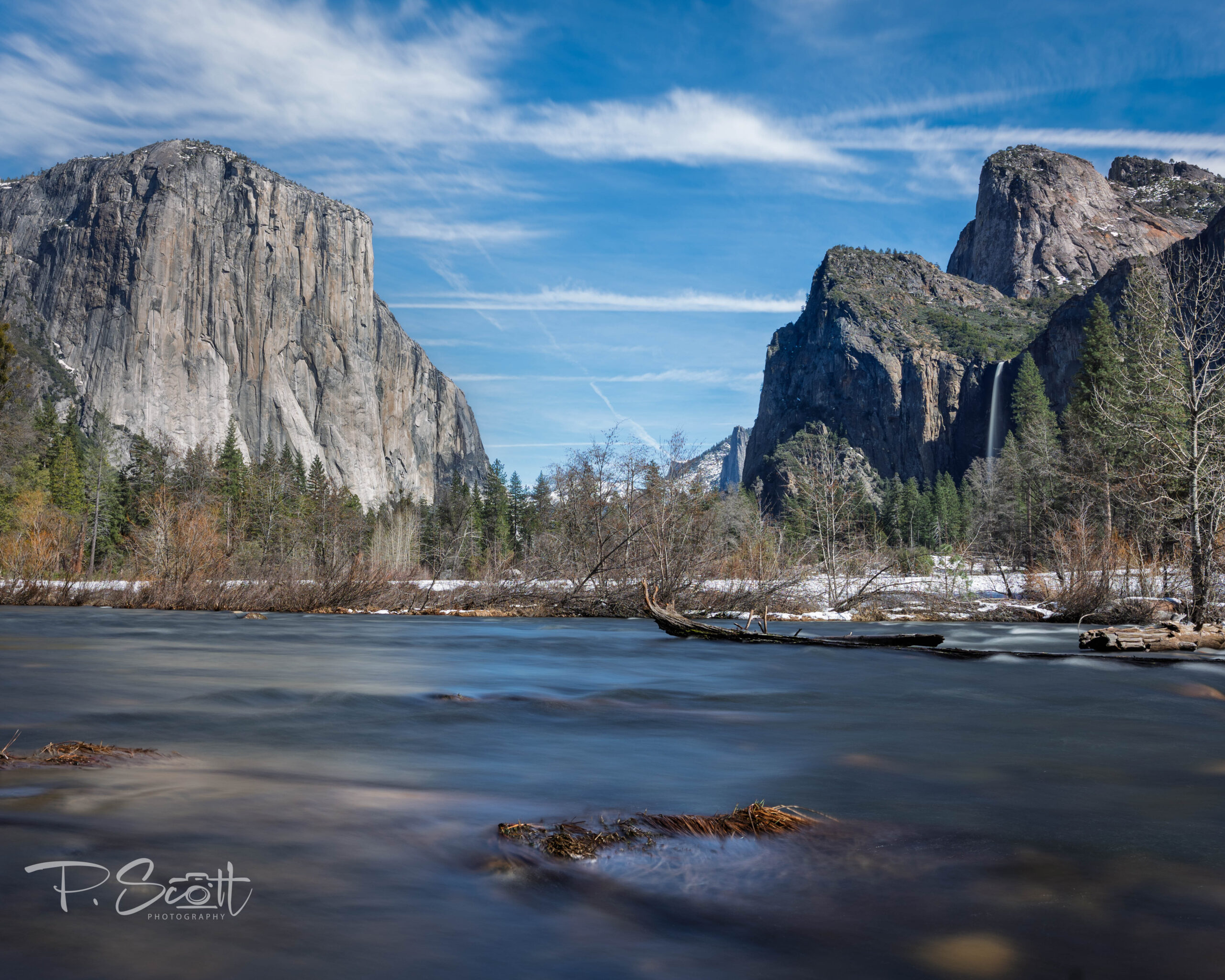
By 12:30 p.m., we were at Valley View. Bridalveil Fall was pouring over the cliff in a steady but thin ribbon. Snow still lined the banks, even as melt was underway.
The Valley Moving
Thanks to the recent storm, the valley walls were full of small, unnamed waterfalls that would probably vanish in a day or two.
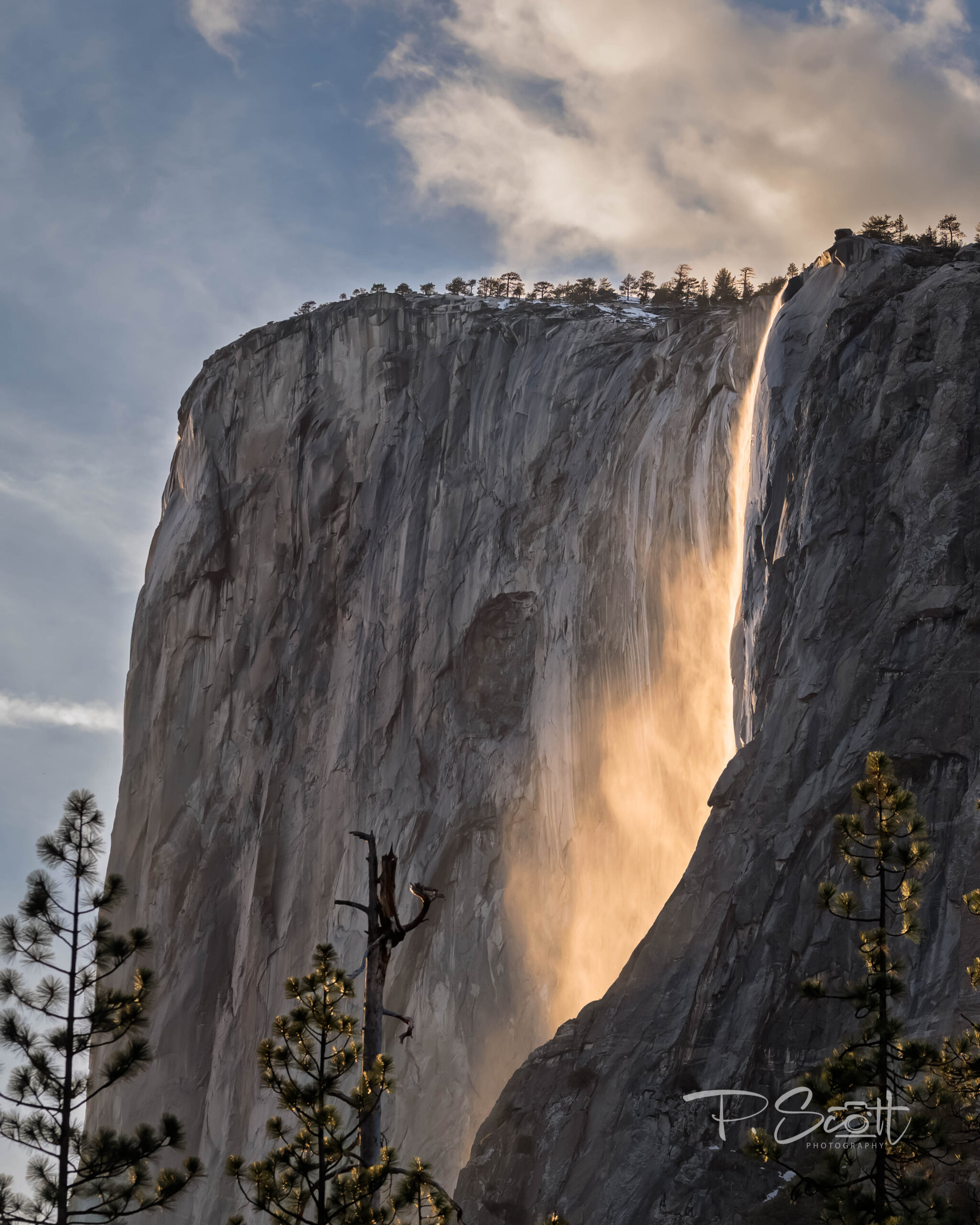
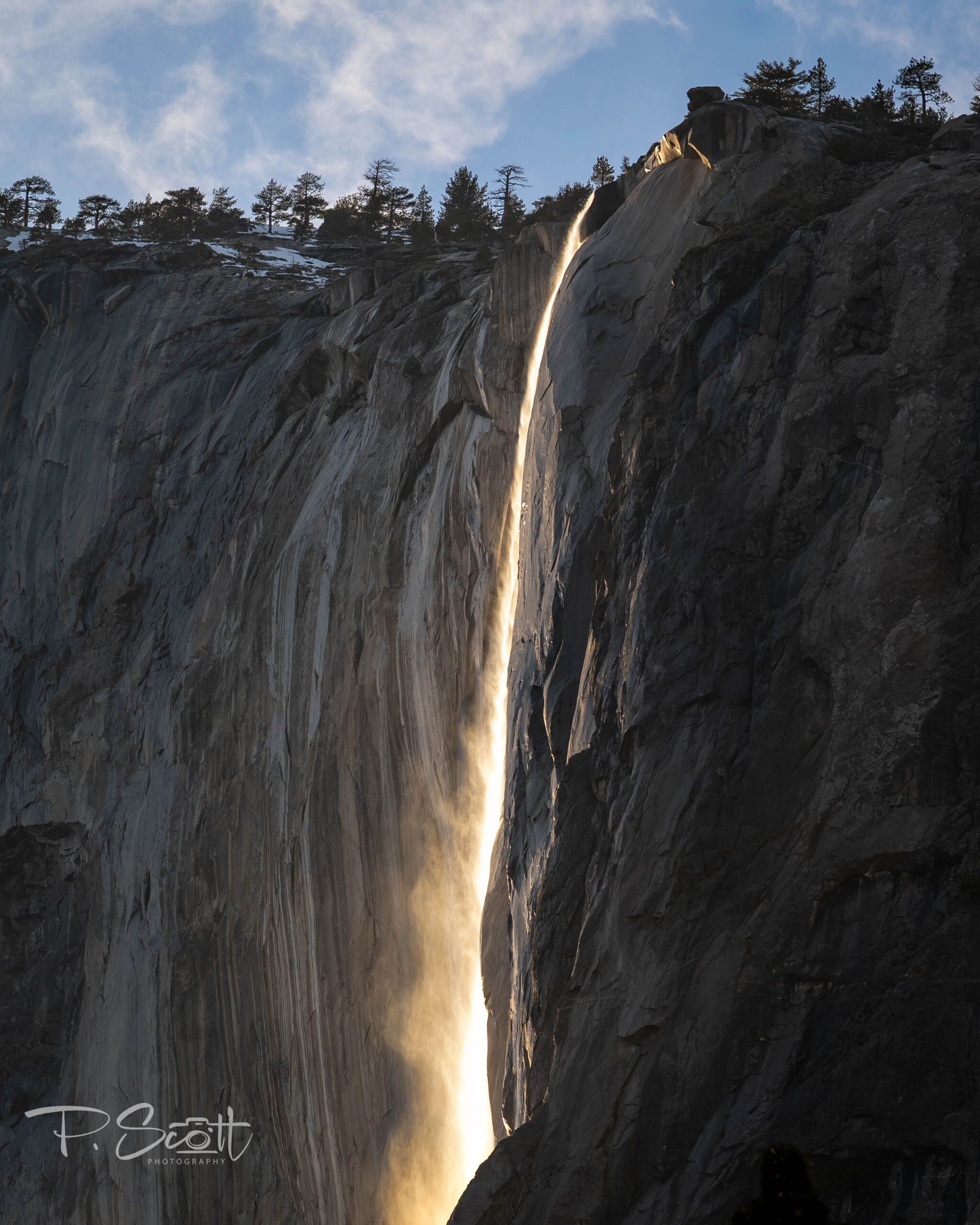
In more than fifteen years of coming here during Firefall season, this was the strongest we had ever seen Horsetail Falls flowing. At one point, it appeared as if two separate waterfalls were pouring over the cliff where Horsetail had barely misted two weeks earlier.
Different Viewing Location
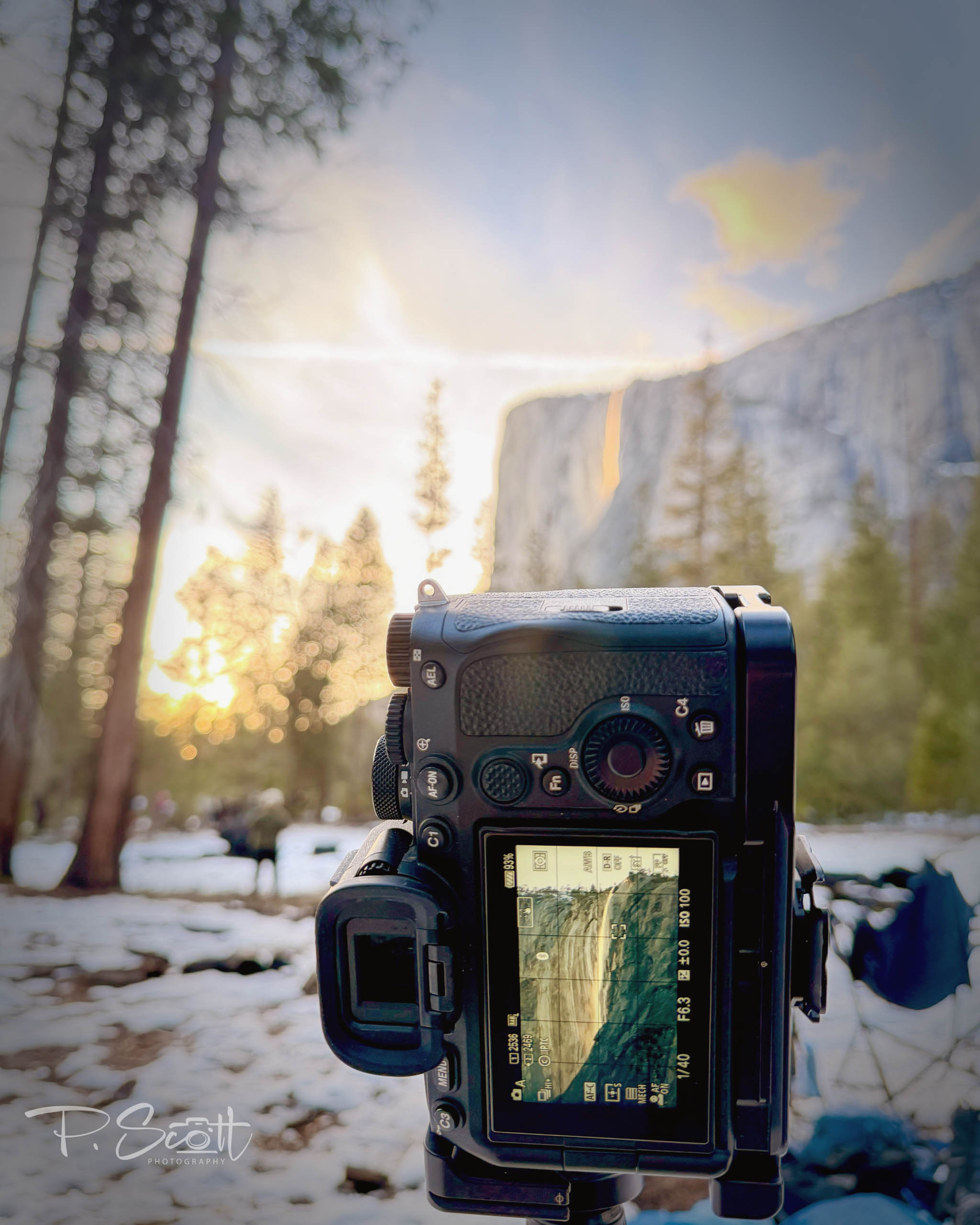
For sunset, we chose a different vantage point than earlier in the month. Instead of the El Capitan Picnic Area, we set up closer to Camp 4. From this distance, the snow along the rim of El Capitan was more visible.
The crowd was smaller than on Presidents' Day weekend. Again, we saw very few tripods. Mostly phones.
The sky had been clear all day. As sunset approached, clouds moved in behind us, filtering the light. The rock face began darkening sooner than expected.
For a moment, it looked like the light might disappear.
Then it began to build.
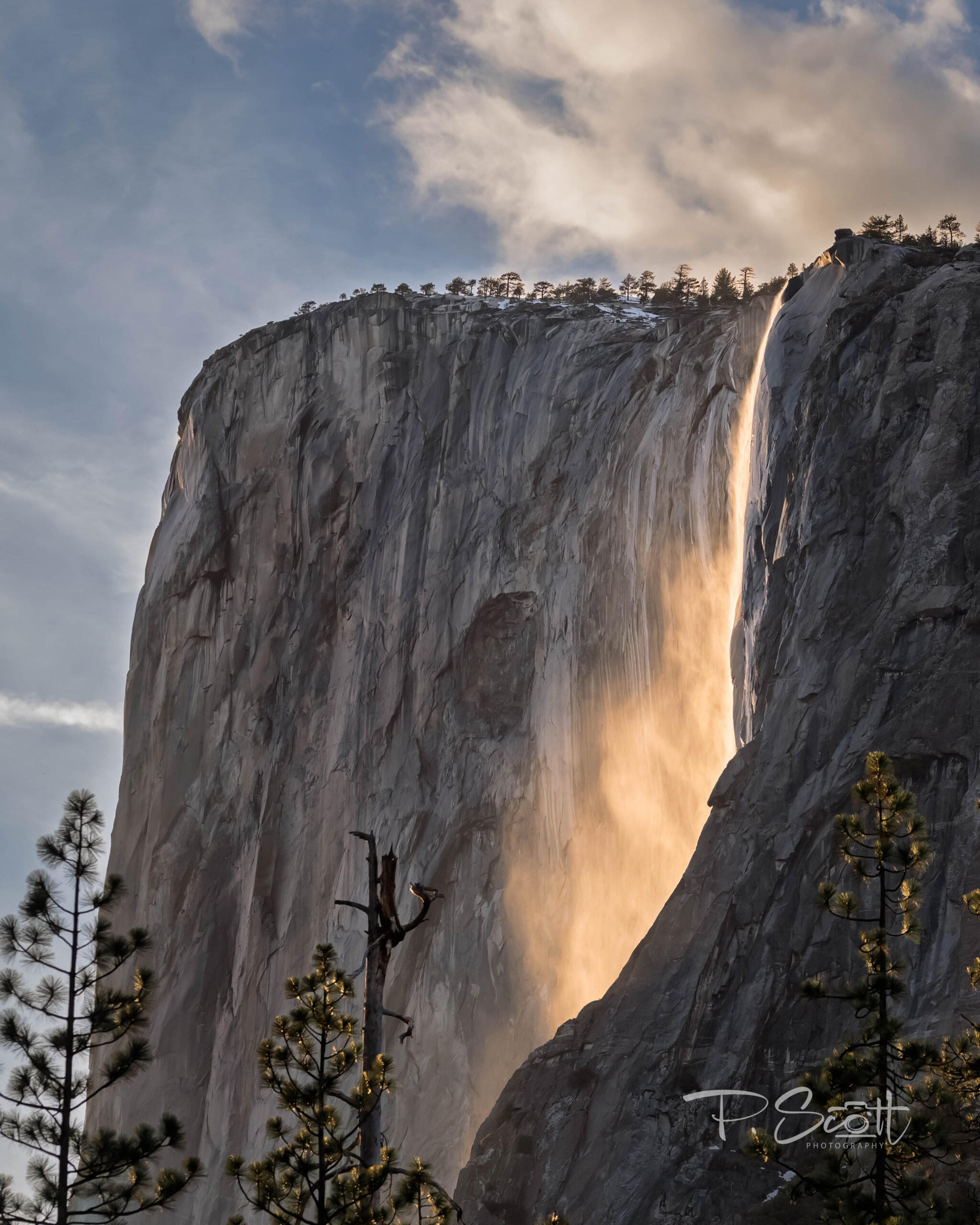
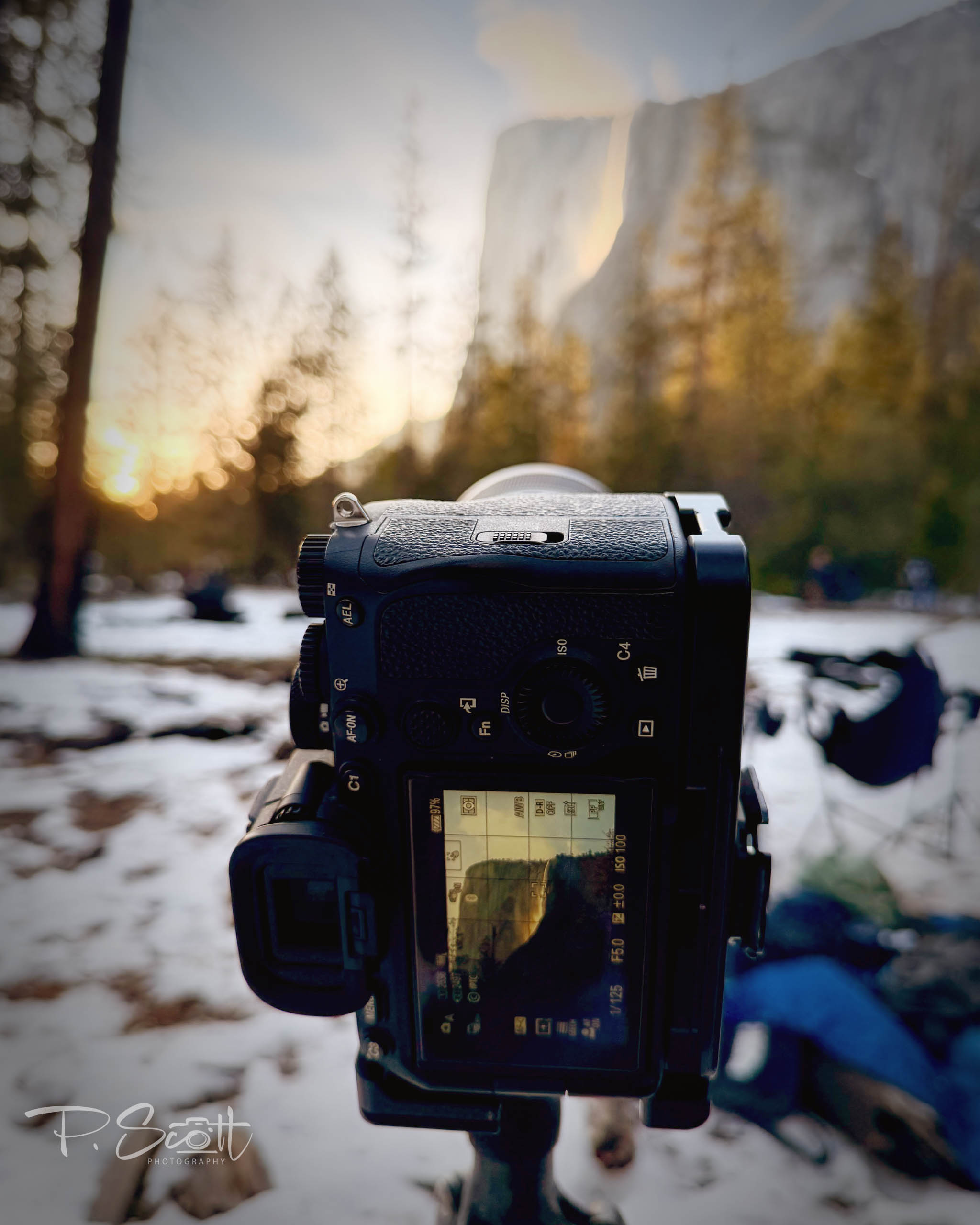
Over the next five to ten minutes, the glow strengthened. And for a few minutes, Horsetail Falls was fully illuminated. The surrounding granite fell into shadow as the sun dropped lower, increasing the contrast between the dark rock and glowing water.
It was not the most vibrant orange we've seen in past years. The clouds softened it. But the amount of water made up for that.
The Next Morning
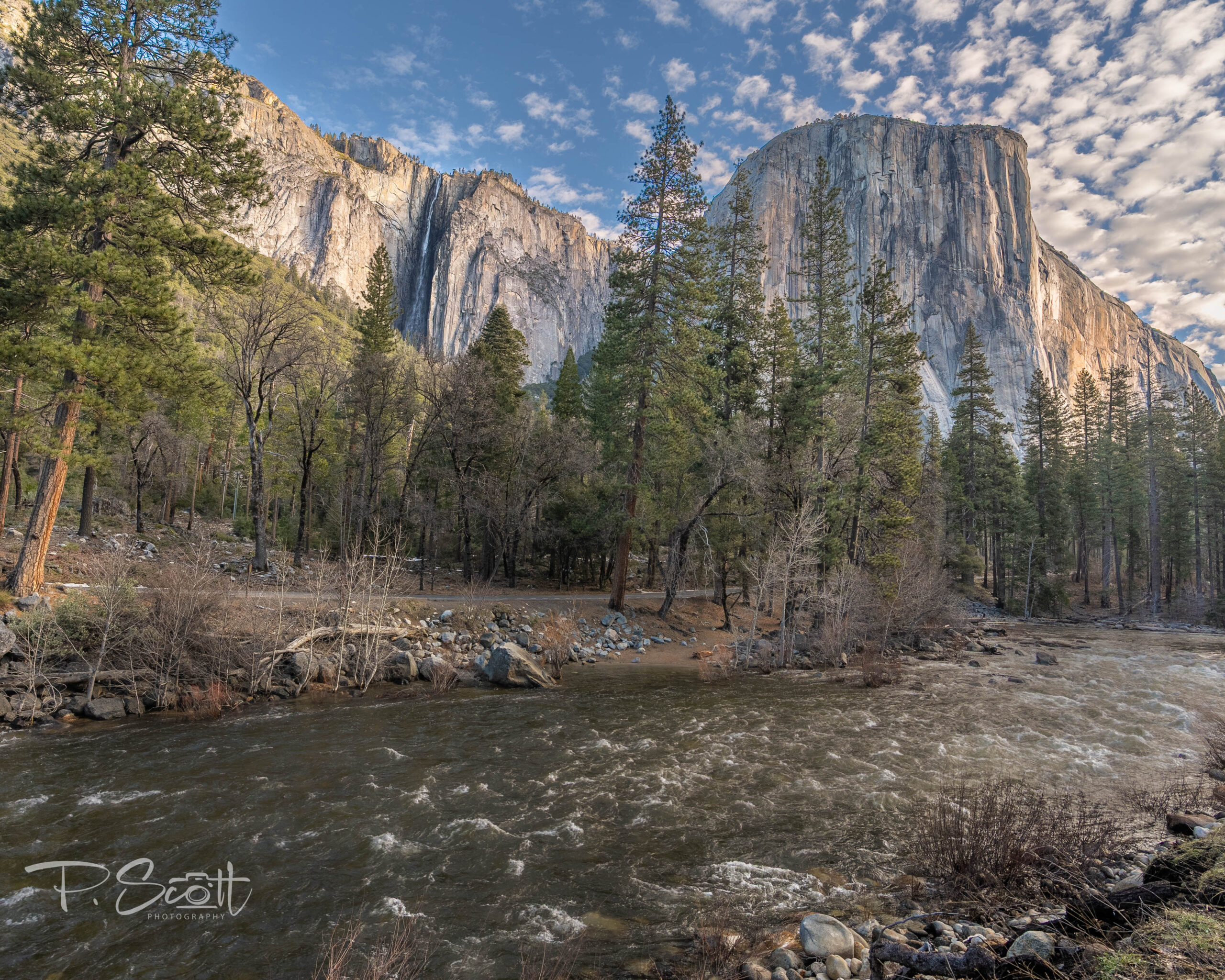
The next day, we got up early, stopped at Starbucks, and went looking for morning light in the valley. The sun was hitting the Dawn Wall on El Capitan, and Ribbon Falls was roaring.
Firefall season is over for 2026, but we'll be back.